Sustainable Building Made Easy
Our Commitment to Creating a Positive Impact
Today’s polymeric exterior products—such as roofing, cladding, trim, fencing, and more—already offer some of the lowest rates of emissions and material waste of all building materials. But we know there’s always more we can do on our path to a cleaner future.
Moving Forward Together: Our Key Focus Areas

Reducing Environmental Impact
We’re committed to discovering and supporting innovations that help further reduce emissions and shrink our carbon footprint across all types of polymeric exteriors.

Education and Transparency
We educate the industry about the sustainability of polymeric products, from their recyclability to their green building benefits, so everyone can make informed choices.

Recycling Initiatives
We connect manufacturers, installers, recyclers, and homeowners to promote recycling at every stage to keep valuable post-consumer polymeric materials in use and out of landfills.
Cutting Down on Emissions and Waste
Polymeric exterior products generate low carbon footprints. In fact, recent efforts have achieved double-digit reductions in total lifecycle carbon emissions, highlighting our collective progress.
Our industry is continuously making significant strides to further reduce our environmental impact at every stage.
Here’s how:
- Advanced Manufacturing Processes: Ongoing advancements mean reduced energy consumption and fewer emissions during production.
- Lightweight Materials: Polymeric products are substantially lighter than many alternatives, greatly reducing emissions during transport.
- Enhanced Durability: Polymeric products are designed to last longer, which reduces the need for frequent replacements and minimizes waste.
Reclaim. Recycle. Repeat.
Polymeric products reduce waste through recycling. By reclaiming and reusing materials, we minimize environmental impact and demand for virgin resources, while also closing the loop and turning waste into opportunity for a sustainable future.
This circular approach can be broken down into three key stages:
- Reclaim: Identify and recover valuable materials from waste or decommissioned products to give them a new purpose, reducing the need for raw resource extraction.
- Recycle: Transform reclaimed materials through effective recycling processes, ensuring they can be efficiently reintegrated into production cycles.
- Repeat: Foster a sustainable culture by continuously prioritizing reclamation and recycling efforts, establishing a circular system that benefits both the environment and the economy.
Maximizing Our Recycling Potential
PEPA is committed to making it even easier to recycle polymeric exterior products. Through our Revinylize™ Recycling Collaborative, we’re working to expand convenient recycling access for polymeric materials in communities nationwide.
Educational Resources & Industry Advocacy
PEPA works to raise awareness about polymeric sustainability through targeted education and outreach. Our industry-specific courses and CEU-accredited programs equip professionals with the knowledge to apply sustainable practices. These initiatives empower industry leaders to adopt innovative solutions, highlighting the environmental benefits of polymeric materials.
Building Trust Through Environmental Transparency
Environmental Product Declarations
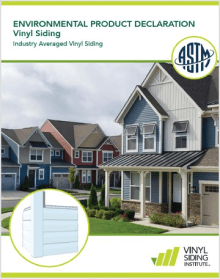
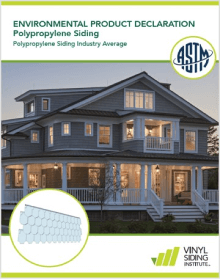
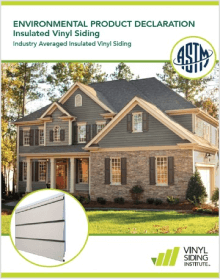
As demand for green building grows, PEPA remains dedicated to expanding Environmental Product Declarations (EPDs) across polymeric products. EDPs provide trustworthy data on a product’s environmental impact across its entire lifecycle, from raw material extraction to disposal. Manufacturers and building professionals can use this information to make informed decisions, leading to more sustainable building practices.
For manufacturers:
- Improves product design and innovation.
- Identifies opportunities for sustainability enhancements.
- Showcases commitment to environmental responsibility.
For architects and builders:
- Ensures transparency in material selection.
- Provides reliable and comparable environmental data.
- Guides eco-conscious material choices with confidence.
For the construction industry:
- Supports green building certifications and standards.
- Strengthens trust through verified data.
- Encourages industry-wide adoption of sustainable practices.

Choosing Sustainable Materials
We’re pleased to stand alongside leaders like Amazon, Google and Turner as sponsors of Building Transparency. We support its core mission to provide open access to the data and tools necessary for enabling broad and swift action across the building industry in addressing embodied carbon’s role in climate change.
The organization’s Embodied Carbon in Construction Calculator(EC3), a free database of construction EPDs as well as a matching building impact calculator for use in design and material procurement, helps make the right material choices.
National Green Building Programs
Attaining green building certifications allows you to increase property value, qualify for tax credits and, most importantly, recognizes construction that saves significant energy and cost over the lifespan of the structure, promoting better occupancy rates.
These nationally recognized programs offer green credits for polymeric exterior products


California Green Building Code
(CalGreen)
- Based on industry Life Cycle Inventory and Analysis conducted in 2021 and 2016.
https://polymericexteriors.org/wp-content/uploads/2022/06/VSI-EPD-VinylSiding-2022.pdf
https://polymericexteriors.org/wp-content/uploads/2021/06/Vinyl-Siding-EPD.pdf - Less impact illustrations based on Federal government’s National Institute of Standards and Technology Building for Environmental and Economic life cycle data and James Hardie’s environmental product declarations data.