Vinyl siding is among the most popular claddings for remodeling for many reasons. Reason #1: Sustainability.
Vinyl siding is lightweight yet durable, often made with recycled material and recyclable (where recycling programs exist). It can also be installed over existing siding, reducing waste and keeping materials out of landfills. It requires no painting or maintenance with additional “eco-non-friendly” materials or substances – simply rain and the occasional wash with a standard garden hose. Insulated vinyl siding also allows for the greatest energy efficiency compared to other exteriors.
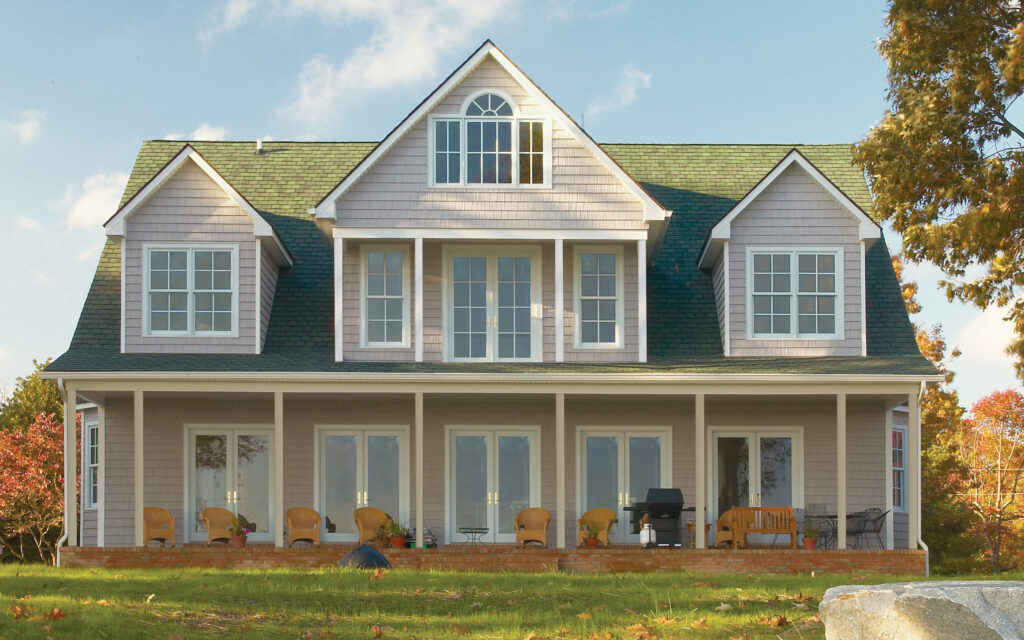
Vinyl Siding and Continuous Insulation Fill a Need for More Energy-Efficient Homes
“When remodeling, vinyl siding gives homeowners the chance to weatherize their homes,” said Matt Dobson, Senior Vice President of the Polymeric Exterior Products Association (PEPA). “You can seal up windows and doors by using insulated vinyl siding or install vinyl siding with foam.”
Matt maintains that – while vinyl siding performs very well when building homes from scratch – the existing housing stock needs improvement in terms of sustainability and energy efficiency. And vinyl siding is the ultimate solution when it comes to sustainability and energy efficiency.
“The 2021 IECC Energy Code requires continuous insulation on residential structures, especially in the Northern states,” Matt said. “Vinyl siding is ideal for meeting these continuous insulation requirements.”
The 2021 International Energy Conservation Code (IECC), often referred to as the “energy code,” is the primary regulatory tool for energy-efficient residential construction. The continuous insulation that it mandates is an insulating material that is continuous across all structural members, preventing energy loss pathways (known as thermal bridges) other than fasteners and service openings. It is installed on the interior or exterior or is integral to any opaque surface of the building envelope. It has been widely accepted as the conventional construction method moving forward, producing a tighter home and an energy-efficient living environment. Again, it’s vinyl siding that makes continuous insulation most effective.
Smaller Footprint, Longer Lifespan
Vinyl siding has the lowest carbon footprint of all other claddings, produced with almost 0% manufacturing waste, requiring less maintenance and carrying less weight. Fiber cement, for example, weighs 300-500 pounds per square foot, while vinyl siding weighs only 50-100 pounds per square foot. Vinyl siding has an 83% lower impact on global warming compared to brick and mortar, and 40% lower impact than fiber cement.
Vinyl siding’s carbon emissions have also decreased 15% over their life cycle during the past decade.
And according to the U.S. Department of Commerce’s National Institute of Standards and Technology, vinyl siding lasts at least 60 years. Improvements in vinyl siding’s UV protection have also increased its performance lifespan. A longer lifespan of your home’s building materials equals an eco-friendlier home.
The Most Recyclable Cladding
Vinyl siding is recyclable even during manufacturing. The co-extrusion process allows for material waste to be recycled into the process or reused to make other products. After a long performance life, post-consumer rigid vinyl is recyclable where recycling programs exist.
Thanks to PEPA’s proactive sustainability vision, they have partnered with their manufacturer and distributor members and other industry stakeholders to form the Revinylize Recycling Collaborative. Launched in late 2023, Revinylize is on track to recycle 5 million pounds of post-consumer rigid vinyl by the end of this year. The Revinylize network of contractors, distributors, recyclers and municipal agencies has grown to 16 collection sites in seven states, with a long-term goal of recycling 300 million pounds of post-consumer vinyl siding (that is available annually) through a more expansive network.
To learn more about the eco-friendly benefits of vinyl siding, check out this Environmental Product Declaration (EPD).
Don’t Forget the Roof!
Like vinyl siding, polymeric roof tiles offer many of the same eco-friendly benefits relating to material composition, longer performance life and energy efficiency. These synthetic roof materials are durable and less likely to break during transport and installation compared to other products. This means less installation waste and lower energy consumption.
Additionally, polymeric roof tiles are available in lighter colors for ideal solar reflection and absorption, achieving a “cool roof” effect. These products lower the temperature of the home and the local ambient air, thereby reducing the “urban heat island effect” in higher-density residential communities.
Many polymeric roof tiles are manufactured using recycled post-industrial polymers that are diverted from landfills. After a long service life, polymeric roof systems may be recycled (where programs exist) to create a more circular economy for roofing and other building materials.
Evangelizing Polymeric Exterior Benefits
PEPA and its members are proud of their shared efforts to create and continuously improve the eco-friendliness of their products.
They also recognize that all this traction is meaningless unless they can educate contractors, homeowners and other influencers on how polymeric exteriors can positively impact their local environments.
Sustainability is a priority in everything PEPA does, from advocacy and codes and standards work to installer training and product certification, as well as architect and designer education. To learn more about improving the eco-friendliness of your home or neighborhood, check out PEPA’s Sustainability resources or email Matt Dobson.
_______________________________________________________________________________________________________
Don Browne is a writer, entrepreneur and local legislator who believes that the power of words can change the world. He provides unique writing services for clients in the construction, health care, IT and hospitality sectors. He has a passion for small business and start-ups, as well as writing about Irish history, family and corporate biographies. As a homeowner and father of four who is passionate about community development, Don looks forward to writing more about the exciting possibilities of creating traditional neighborhoods and more sustainable communities using modern materials.