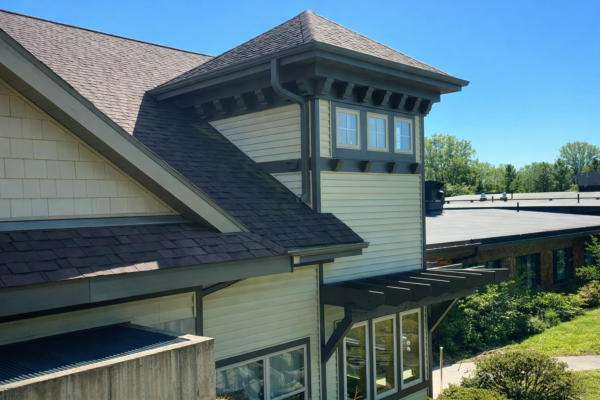
Architect Believes That His Peers Can “Thrive” with Vinyl Siding
By Don Browne
Jeremy Bartlett is the Founder & Principal of Thrive Architects, a Milwaukee-area firm with offices in Madison and Appleton, Wisconsin. The firm’s portfolio includes a diverse range of commercial and residential projects, some of which have featured vinyl siding.
But because of local bans on polymeric building materials, Jeremy’s options for choosing polymeric claddings have been limited to date.
“We’re still confronting local zoning regulations that prohibit vinyl siding on commercial structures,” Jeremy said. “We get more opportunities with residential projects, but not much when you consider the zoning restrictions. The developers work hand-in-hand with the city to create the ordinances that help them win the work.”
A recent exception for Thrive Architects is a senior living community expansion project in a small town that allows vinyl siding. The original facility was clad with vinyl siding since it was built around 40 years ago. The finished project will involve converting shared rooms to private single units and expanding space, for a total of 38 living units.
It will remain a single-story building, completely covered in vinyl siding.
“We haven’t decided on the style of siding, but we like the enormous flexibility vinyl siding provides when it comes to colors and design,” Jeremy noted. “There is some brick on the building, so we want to match it with an appropriate style.”
Jeremy sees the senior living community project as an opportunity to promote their vinyl siding work.
“If more people see the design options, the more acceptable vinyl siding will be,” he said. “Vinyl siding has come a long way, but a lot of architects still see it as a cheap plastic with limited design and color options. Manufacturing technologies have improved so much, I imagine it’s a monumental task (for the polymeric exterior industry) to educate architects and homeowners.”
Though “monumental,” Jeremy feels PEPA’s efforts are critical for helping the homebuilding industry.
“I volunteer on a planning commission for an affluent suburb. 50% of the commercial building’s four sides must be masonry. One of my colleagues at the firm serves on a planning commission for a blue-collar, industrial city closer to Milwaukee and they have the same restrictions. This creates a lot of missed opportunities because a lot of the builders I work with use vinyl siding, but they have their hands tied by regulations.”
Why Vinyl Siding?
In addition to its affordability, Jeremy prefers vinyl siding because continuous insulation is now a must for commercial construction in Wisconsin and polymeric claddings allow for seamless installation. He also likes that it’s termite-resistant and easy to repair, and that the lighter colors hold up well. In particular, Jeremy loves the design advantages vinyl siding offers, especially after reviewing PEPA’s valuable resource guide, Architectural Polymers: Best Practices for Architectural Specifications.
“I like how it’s designed for expansion and contraction and how well it works together,” he said.” The J-channels, the proper receivers and so many other components deserve a closer look. It should pique architects’ interests in revisiting vinyl siding, as the profiles are very impressive and weren’t available years ago. The color options and profiles have expanded quite a bit.”