A proposed fastener table by The Polymeric Exterior Products Association’s (PEPA) Code Development Work Group (CDWG) signals a positive change by recognizing that vinyl siding, backed vinyl siding and insulated vinyl siding products are installed over a wide range of wall sheathings and framing spacings.
The building codes and PEPA’s Installation Manual have prescribed installing these polymeric claddings 16” on center into the studs. There are many scenarios where it’s difficult to figure out how to do that. The new table will help address those challenges in the field.
PEPA’s International Residential Code (IRC) and International Building Code (IBC) proposals were accepted for inclusion in the 2027 I-Codes. IRC Table R703.11.1 – Prescriptive Fastener Requirements for Vinyl, Backed Vinyl and Insulated Vinyl Siding show how our industry and the built community turned the page by identifying alternative standardized installation practices.
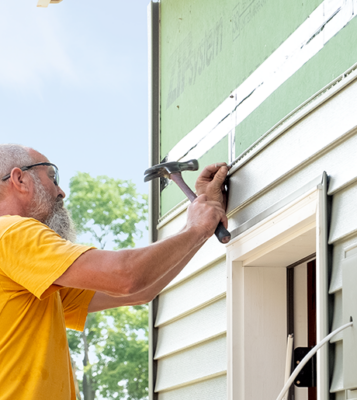
The CDWG and PEPA’s Technical Committee invested quality time in developing multiple standardized prescriptive methods for fastening. Thanks to these efforts, we have evolved from a single prescriptive way to install siding to six ways that offer builders and installers more options for approaching installation, depending on the construction situation (i.e., new construction, remodeling, over masonry (CMUs), etc.).
How It All Started
PEPA’s Technical Committee began the process several years ago by testing various types of fasteners, followed by the formation of the table during an intensive work session by the CDWG in Florida in October 2024. For background, comprehensive proposals sometimes take several cycles to make it through the code process, but the proposed table made it through (with significant modifications) the code action hearings of both the IRC and the IBC.
I am thankful for the significant collaboration by both PEPA members, other industry partners and the Technical Committee. It comes as no surprise to me that the CDWG delivered outstanding results through their efforts.
This important achievement highlights the thorough technical work and expertise that contributed to these changes.
The Optimal Choice – Installation with Ring Shank Nails
While smooth shank roofing/siding nails have been a standard in the industry, thorough testing with other industry groups – including roofing and wood – revealed that a shift from the smooth shank to ring shank is “the way to go.” The ring shank provides significantly better hold in the nailable substrate due to the rings and the friction they create with the wood.
Once you use a ring shank, hitting the stud becomes less of an issue. Because the ring shank has greater holding power, you don’t have to hit the stud in many cases, resulting in fewer installation failures. Ultimately, I strongly recommend that the industry adopt ring shank nails, as they provide superior durability and strength.
Other Parts of the Table
There are other installation practices, aside from the ring shank recognition, that are a part of the table, including:
The use of these polymeric claddings with furring:
- Over masonry (CMU) construction, which is used frequently in Florida and the Southwest
- With foam insulation for super-insulated structures (foam over 2” thick)
- Also, in normal non-high wind areas, there is a provision to use fasteners 24” on center for non-high wind areas to help with attachment with 24” on center energy-efficient framing techniques which is constructed to reduce thermal bridging to meet new energy efficiency codes on construction. It’s the last provision on the table.
Implementation Into PEPA’s New Installation Manual
Table R703.11.1 will go into effect in the 2027 I-Codes to be released soon. PEPA’s Installation Central Work Group has proactively accepted and embraced this table and is implementing in the new Installation Manual, which will be published this year as well.
To learn more about the proposed fastener table and other code developments, contact me at mdobson@polymericexteriors.org.